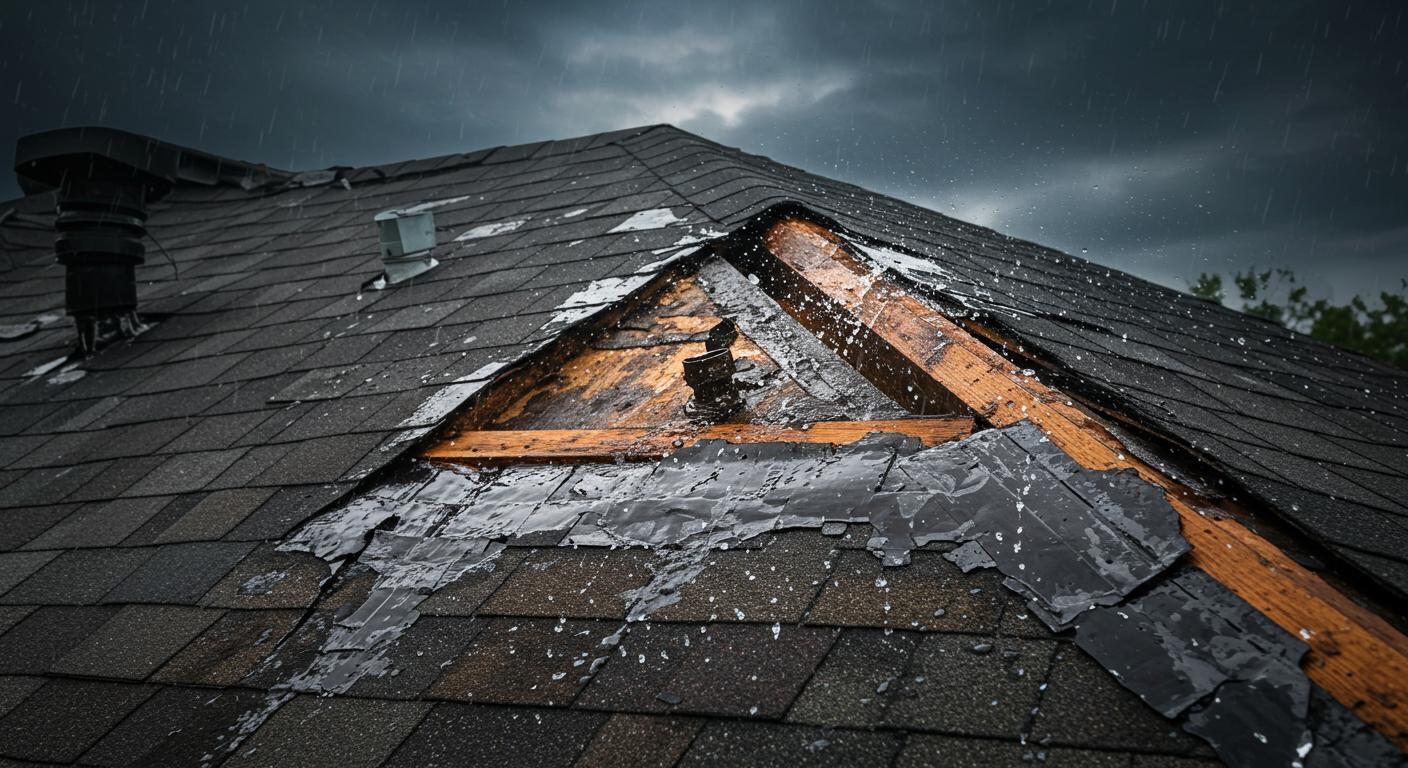

A gutter system does more than collect rainwater from your roof. It needs to move that water safely away from your home and that is where the gutter downspout becomes essential.
When a downspout is clogged, leaking, poorly positioned, or too small for the amount of water coming off the roof, water can overflow around the home instead of draining away properly. Over time, that can contribute to damaged landscaping, wet siding, foundation concerns, basement moisture, and problems around the roof edge.
For homeowners in New Jersey, where heavy rain, falling leaves, snow, ice, and freezing temperatures all affect exterior drainage systems, keeping gutters and downspouts working properly should be part of regular home maintenance.
Here is what every homeowner should know.
What Is a Gutter Downspout?
A gutter downspout is the vertical pipe connected to your home’s gutter system.
Gutters collect water running off the roof. The water then travels toward an outlet and enters the downspout, which carries it from the roofline toward the ground.
A complete drainage system usually includes:
- Gutters along the roof edge
- Gutter outlets
- Downspouts
- Elbows
- Downspout extensions
- Splash blocks or drainage connections
The goal is simple: move water away from areas where it could cause damage.
A gutter without properly functioning downspouts may collect water successfully but still fail to protect the home.
How Does a Gutter Downspout Work?
During rain, water flows down the roof surface and into the gutters.
The gutters are installed with a slight slope that encourages water to move toward the downspout. Once the water reaches the outlet, gravity carries it through the downspout toward ground level.
The final part is especially important.
Water should not simply be dumped directly beside the foundation. A properly planned system uses a downspout extension, splash block, or other drainage method to move runoff farther away from the house.
If water repeatedly pools beside the foundation after storms, the problem may not be the gutter itself. The downspout placement or drainage path may need attention.
Why Are Downspouts So Important?
Your roof can collect a large amount of water during a storm.
Without an effective drainage path, that runoff may spill over gutters or collect around your home’s perimeter.
Properly functioning downspouts help direct water away from:
- Roofing edges
- Fascia boards
- Siding
- Windows and doors
- Landscaping
- Walkways
- Basement walls
- The home’s foundation
This is why gutter maintenance should include the entire drainage system—not just removing leaves from the horizontal gutters.
7 Common Gutter Downspout Problems
1. Clogged Downspouts
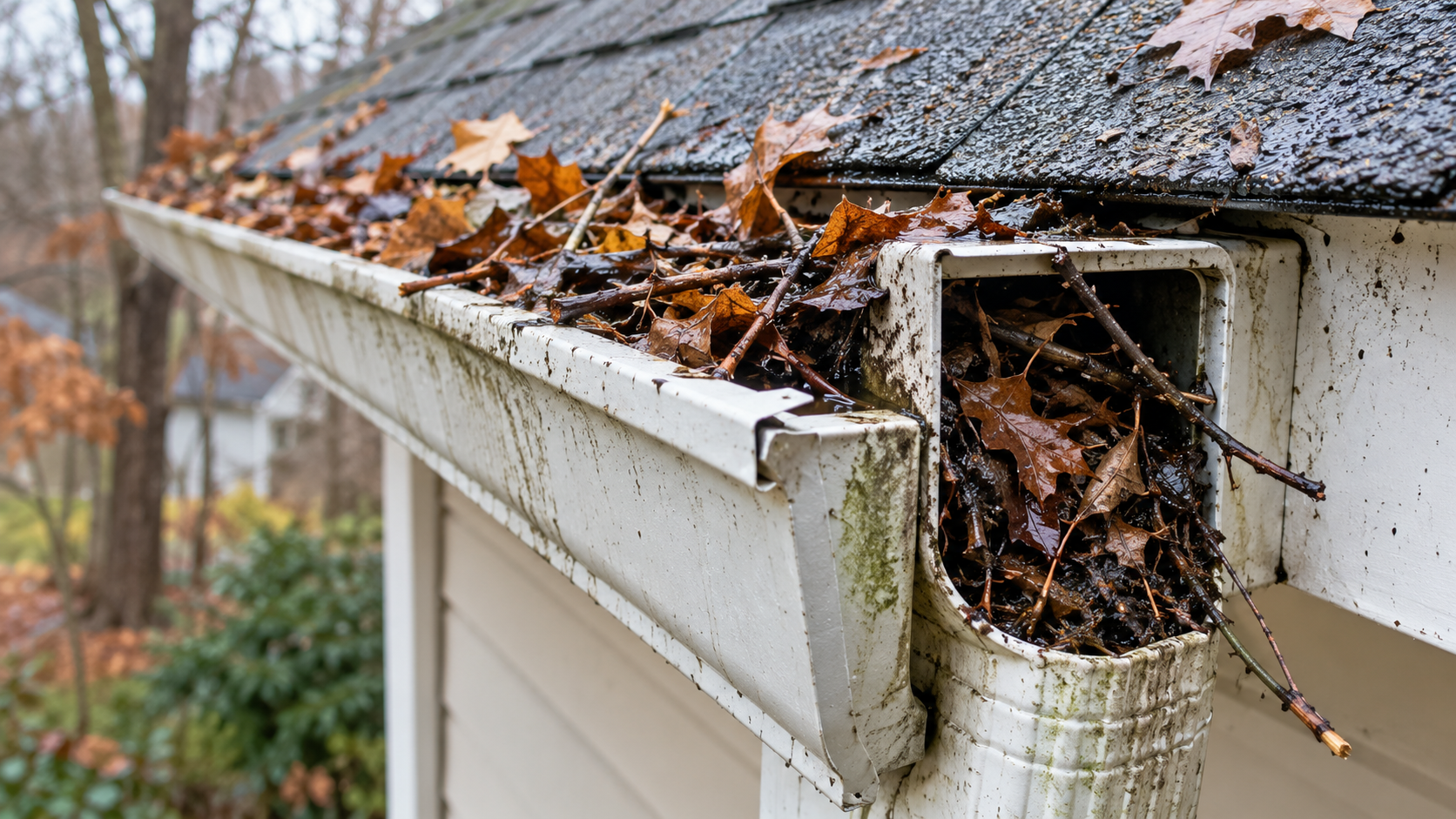
Clogs are one of the most common problems homeowners experience.
Leaves, twigs, roof granules, pine needles and other debris can enter gutters and eventually become trapped inside a downspout.
Common signs include:
- Water overflowing from the gutter
- Little or no water exiting the downspout
- Water spilling near the gutter outlet
- Unusual dripping from downspout joints
A blockage should be addressed before another major storm adds more water to the system.
2. Water Pooling Near the Foundation
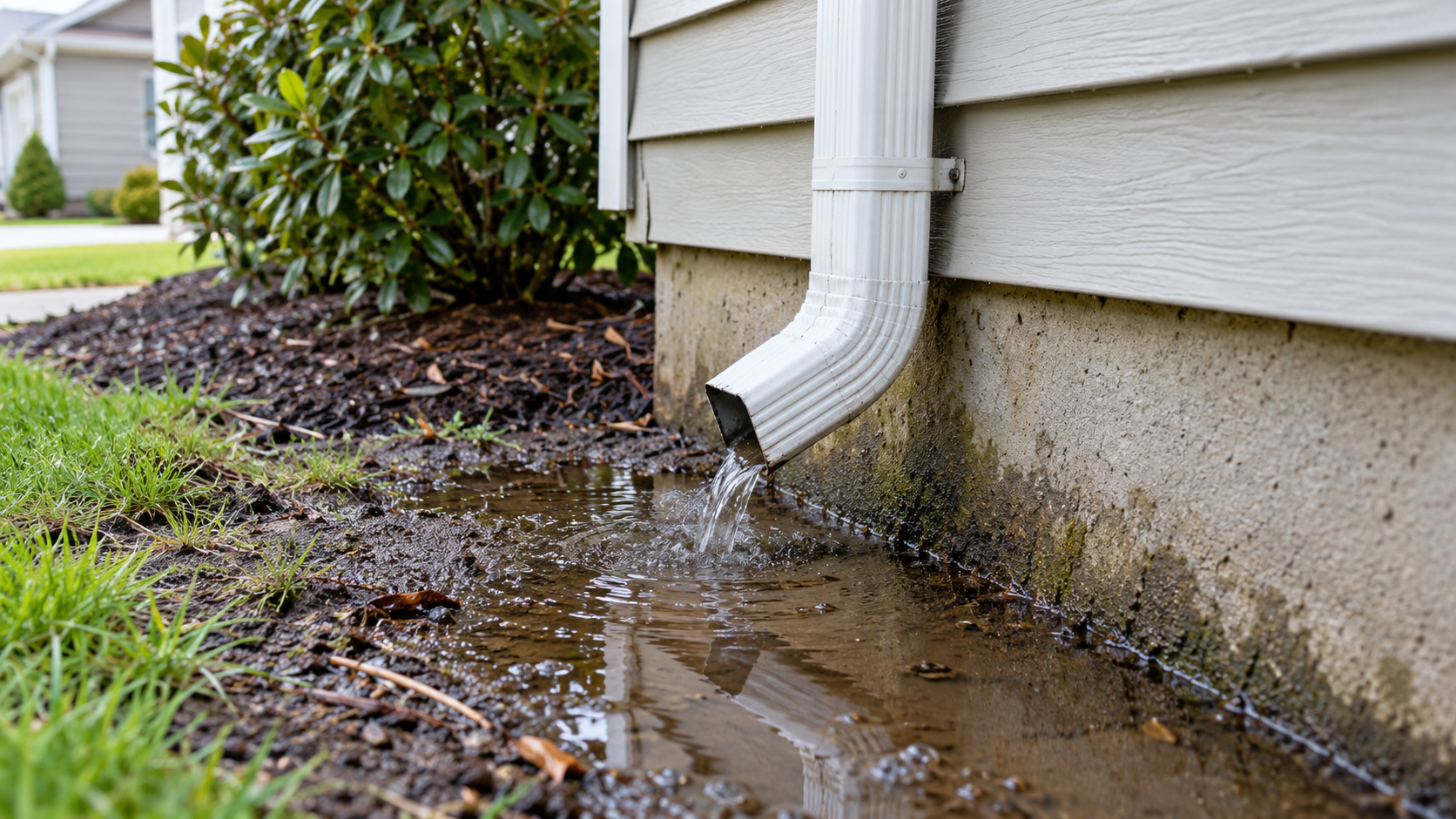
Look at where your downspouts end.
If they release water immediately beside the house, you may notice puddles forming near the foundation after rain.
This often means the water needs to be carried farther away using an extension or a better drainage layout.
Ignoring repeated water accumulation around the home can create unnecessary moisture problems.
3. Leaking Downspout Joints
Downspouts contain connections and elbows that can loosen or deteriorate over time.
When this happens, water may leak before reaching the bottom of the drainage system.
Look for:
- Water dripping from seams
- Staining on siding
- Wet areas around downspout connections
- Sections that appear separated
Small leaks may sometimes be repairable. More extensive deterioration may make replacement a better long-term solution.
4. Loose or Detached Downspouts
Downspouts are secured to exterior walls using straps or brackets.
Strong winds, impacts, aging fasteners, or repeated seasonal weather exposure can cause these components to loosen.
A downspout pulling away from the house may not drain correctly and could eventually become completely detached.
Do not wait for it to fall during a storm. Loose sections should be secured early.
5. Gutters Overflowing Before Water Reaches the Downspout
Sometimes homeowners assume an overflowing gutter means the downspout is clogged.
That is one possibility—but not the only one.
Overflow can also occur when:
- Gutters contain heavy debris
- The gutter pitch is incorrect
- The gutter is undersized
- Too much roof runoff is entering one section
- There are not enough downspouts
A professional inspection can help identify the real reason instead of repeatedly treating the wrong problem.
6. Frozen Downspouts in Winter
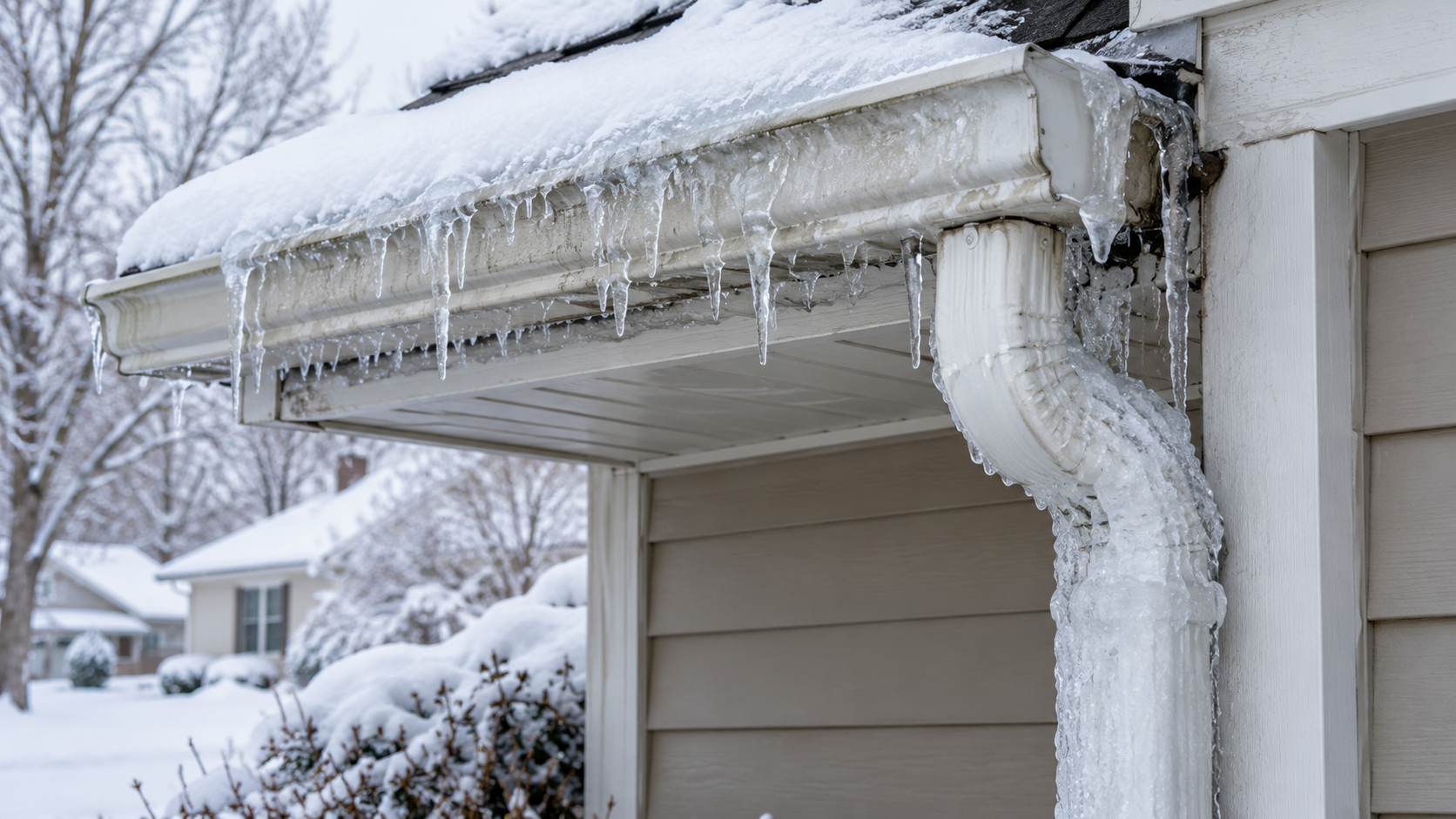
New Jersey winters add another challenge.
Water trapped inside a clogged drainage system can freeze when temperatures drop. Snow and ice can also restrict drainage around roof edges.
This makes fall gutter maintenance especially important.
Before winter arrives, homeowners should check that gutters and downspouts are clear and that water can travel through the system without obstruction.
If the system is already frozen, avoid hitting, pulling, or aggressively breaking ice from gutters. Frozen components can be damaged easily, and icy ladders create serious fall hazards.
7. The Downspout Is Too Small for the Roof
Not every home has the same drainage requirements.
A larger or steeper roof can send significant amounts of water toward the gutter system during a heavy storm.
If gutters repeatedly overflow despite being clean, the existing gutter and downspout system may simply lack enough capacity.
The solution could involve larger gutters, additional downspouts, or repositioning drainage outlets to distribute water more effectively.
How Can You Tell If a Downspout Is Clogged?
You do not always need to disassemble the system to notice a problem.
The easiest time to check is during or shortly after rainfall.
Watch the bottom of the downspout.
Water should exit freely. If the gutter above is full but little water is coming out below, a blockage may be present.
Other warning signs include water spilling over the gutter directly above the downspout and debris visible around the opening.
Homeowners who are uncomfortable working from ladders should leave higher-level inspection and cleaning to professionals.
Should You Repair or Replace a Gutter Downspout?
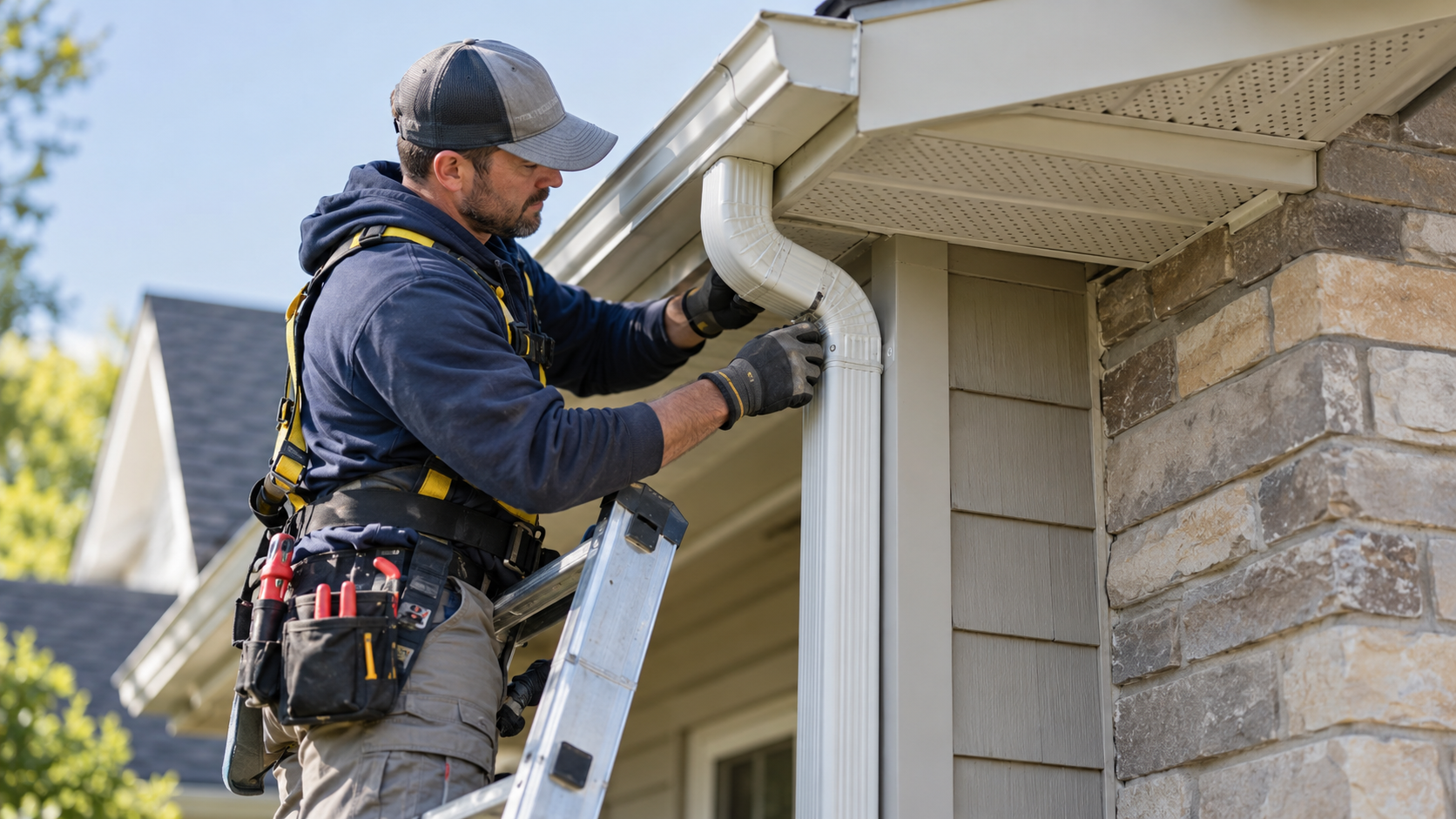
Not every problem requires a completely new gutter system.
Repair may make sense when:
- One connection is loose
- A small section is damaged
- A bracket needs to be replaced
- An extension needs repositioning
Replacement may be a better option when:
- Downspouts are heavily corroded
- Multiple sections leak
- Gutters repeatedly overflow
- The current system is improperly sized
- Drainage was poorly designed
- The gutter system is pulling away from the home
The important part is finding the cause before choosing a solution.
Don’t Forget Your Downspouts Before Winter
Fall is an ideal time to inspect drainage systems because leaves and debris often accumulate just before freezing temperatures arrive.
Before winter, check:
- Gutters for leaves
- Downspout openings for debris
- Loose brackets
- Leaking joints
- Drainage around the foundation
- Downspout extensions
- Signs of gutter overflow
Taking care of these issues early is usually easier than discovering a drainage problem during freezing weather.
Why Choose JVW Roofing for Gutter and Downspout Work?
JVW Roofing has more than 40 years of experience serving homeowners across Monmouth, Ocean, Middlesex, and Mercer Counties.
We are :
. GAF Master Elite® Contractor
. NJ License #13VH14032300
Because gutters, downspouts, fascia, and roofing work together as one drainage system, we evaluate the whole system before recommending a repair
or replacement.

Need Gutter or Downspout Help in Central New Jersey?
If your gutters overflow, your downspouts do not drain correctly, or your current system needs replacement, the problem should be evaluated before water starts affecting other parts of your home.
JVW Roofing provides professional gutter installation and replacement services in Central New Jersey, including drainage systems designed to move water efficiently away from the home.
Explore our gutter installation and replacement services or contact JVW Roofing to schedule an evaluation.
A properly designed gutter and downspout system does not simply control rainwater—it helps protect your home every time severe weather arrives.
Frequently Asked Questions
What is the purpose of a gutter downspout?
A downspout carries rainwater collected by your gutters from the roofline toward ground level and helps direct it away from the home.
Why does my gutter downspout keep clogging?
Leaves, pine needles, twigs, roof debris and other material can enter the gutter and become trapped inside the downspout.
Why is water coming over my gutters?
Overflow may be caused by clogged gutters or downspouts, improper gutter pitch, insufficient drainage capacity, or an undersized gutter system.
Should a downspout end next to the foundation?
Water should be directed away from the house rather than repeatedly collecting beside the foundation. The proper drainage solution depends on the property and grading.
Can downspouts freeze during winter?
Yes. Water and debris trapped inside gutters or downspouts can freeze when temperatures fall, which is one reason the drainage system should be inspected and cleaned before winter.