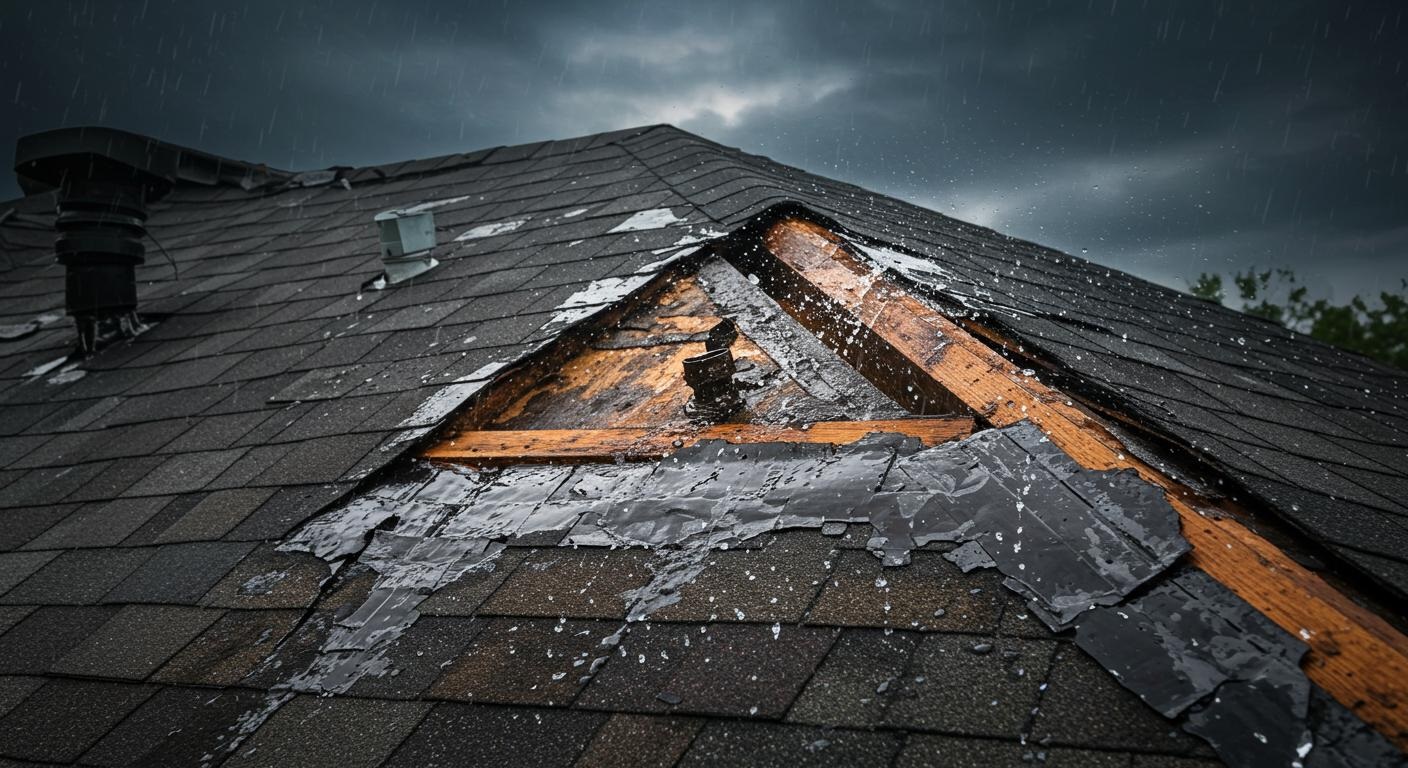

A severe storm is a homeowner’s worst nightmare. Between the howling winds, the rhythmic pounding of hail, and the torrential downpour, your house takes a literal beating. Once the clouds clear, most people take a quick look from the driveway, see no missing shingles, and assume everything is fine. This is a dangerous mistake.

A storm damage roof inspection is the only way to uncover the “invisible” wounds left by Mother Nature. If left unaddressed, these minor issues evolve into catastrophic leaks, mold infestations, and structural rot. In this guide, we’ll explore why a professional assessment is your best defense against long-term property devaluation.
1. The Invisible Threat: Why You Can’t DIY an Inspection
The biggest problem with post-storm scenarios is that roofs are designed to hide damage. Modern architectural shingles can look perfectly flat even if the seal underneath has been ripped apart by a “wind-lift” event.
When you schedule a professional storm damage roof inspection, you aren’t just paying for a pair of eyes on your shingles. You are paying for a diagnostic health check. Experts look for “bruising” on the shingle mat—a subtle indentation caused by hail that prematurely ages the roof. Without a formal storm damage roof inspection, these bruises go unnoticed until the asphalt becomes brittle and starts to leak three years down the line, long after your insurance claim window has closed.
2. The Insurance Advantage: Documentation is Everything
Filing an insurance claim without a professional report is like going to court without a lawyer. Insurance adjusters are trained to minimize payouts. They often categorize significant structural issues as “cosmetic wear and tear.”
This is where a storm damage roof inspection becomes your most powerful tool. A reputable contractor will provide a high-resolution photo report and a detailed line-item estimate. By having a storm damage roof inspection completed before the adjuster arrives, you set the baseline for the claim. You provide the proof needed to show that the “physical loss” is functional, not just aesthetic, ensuring you get the full replacement value you’ve been paying premiums for.
3. Hail vs. Wind: Understanding the Different Wounds
Not all storms are created equal, and neither is the damage they leave behind. A comprehensive storm damage roof inspection will categorize findings into two main areas:
The Impact of Hail
Hail damage is often localized. It knocks the protective ceramic granules off the shingles. These granules are what protect your roof from UV rays. Once they are gone, the sun “cooks” the exposed bitumen, making it waterproof for only a short period. A storm damage roof inspection will identify these “strike zones” across your roof’s facets.
The Power of Wind
Wind damage is mechanical. High-velocity gusts can create a “chatter” effect, where shingles flip up and down rapidly. This breaks the factory sealant. Even if the shingle doesn’t fly off, its ability to resist rain is gone. Only an on-roof storm damage roof inspection can identify these broken seals by manually checking the bond of the shingle courses.
4. Beyond the Shingles: Flashing and Gutters
A common misconception is that a roof is just shingles. In reality, it is a complex system involving flashing, underlayment, and drainage. During a storm damage roof inspection, a technician will examine the metal flashing around chimneys and vents.
Storms often bend or shift these metal components, creating tiny gaps where water can “wick” into your attic. Additionally, the inspector will check your gutters. If your gutters are filled with shingle granules after a storm, it’s a red flag that your roof has suffered significant “scouring” and requires immediate attention.
5. The Financial Cost of Waiting
Some homeowners avoid a storm damage roof inspection because they fear the cost or the hassle. However, the financial reality is simple: an inspection is often free or low-cost, while a full structural restoration due to a hidden leak can cost upwards of $20,000.
Water is patient. It will find the path of least resistance. A small breach identified during a storm damage roof inspection might only require a $300 repair today. If you wait until you see a brown spot on your living room ceiling, you are likely looking at replacing insulation, drywall, and potentially remediating toxic mold.
6. What to Expect During the Inspection Process
When our team arrives for a storm damage roof inspection, we follow a strict protocol:
-
Interior Assessment: Checking the attic for light filtration or dampness.
-
Perimeter Check: Looking for “chitter” (pieces of shingles) on the lawn.
-
Roof-Level Analysis: Mapping out hail hits per “square” (a 10×10 area).
-
Component Check: Inspecting soft metals (vents and valleys) for dents.
-
Summary Report: Delivering a digital document with all findings.
A high-quality storm damage roof inspection leaves no stone unturned. We treat your home as if it were our own, ensuring that every vulnerability is documented for your records and your insurance carrier.
Conclusion: Peace of Mind in the Eye of the Storm
You cannot control the weather, but you can control how you respond to it. A roof is the most expensive and most important protective layer of your home. Entrusting its health to a “quick glance” is a gamble with your biggest investment.
By prioritizing a professional storm damage roof inspection, you ensure that your home remains a safe, dry sanctuary for your family. Don’t wait for the leaks to start. Be proactive, get the documentation you need, and ensure your roof is ready for whatever the next season brings.
Schedule your expert storm damage roof inspection today and rest easy knowing your home is fully protected!