For more than 40 years, JVW Roofing has helped property owners with professional roofing and exterior improvement services. As a licensed contractor, our team understands the importance of durable roofing systems, proper water management, and careful project planning.
This guide explains the warning signs that may indicate a commercial roof needs replacement, the difference between repair and replacement, common commercial roofing systems, cost factors, the replacement process, and how to choose the right roofing contractor.
What Is Commercial Roof Replacement?
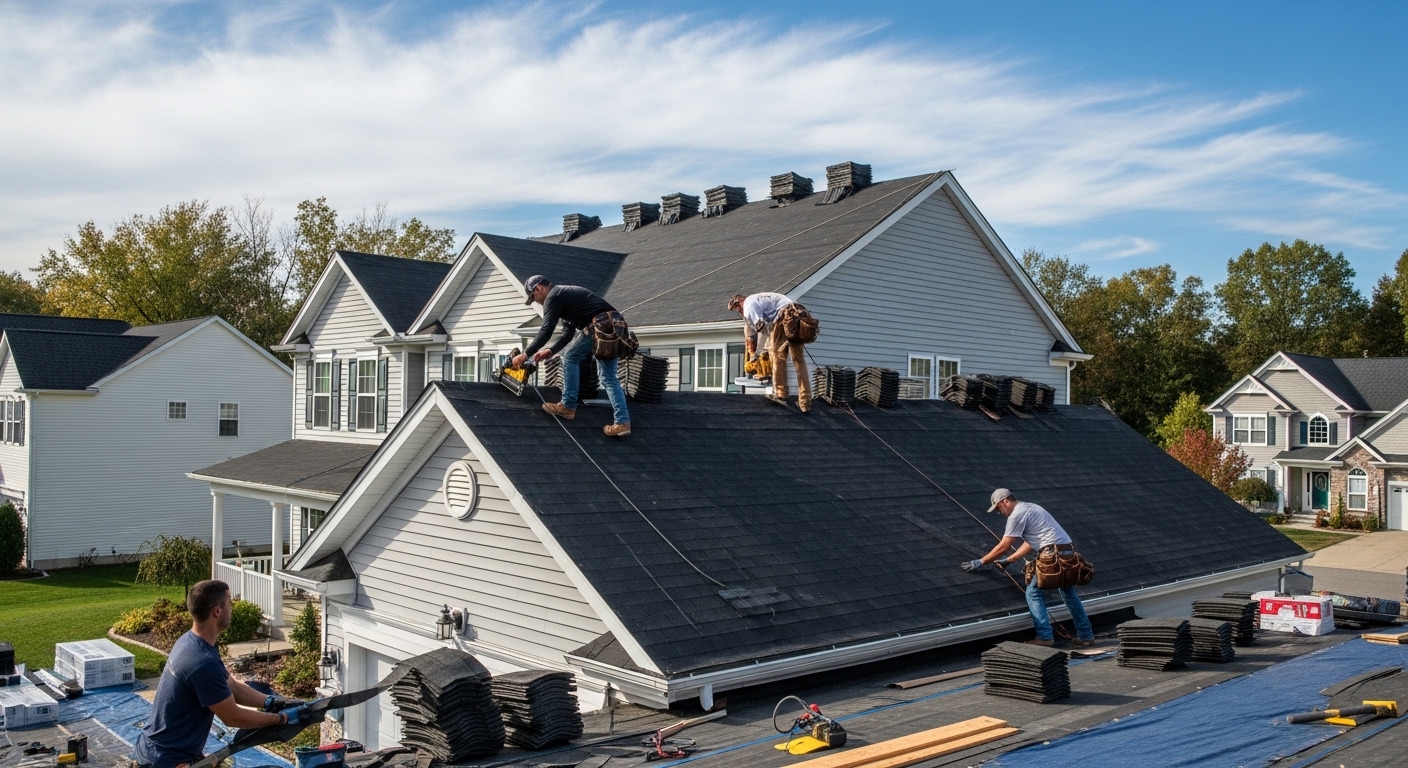
Commercial roof replacement is the process of removing an existing commercial roofing system, addressing underlying problems, and installing a new roofing system designed for the building.
A replacement project may involve:
- Removing existing roofing
- Evaluating the roof deck
- Inspecting insulation
- Addressing moisture damage
- Installing new insulation when required
- Installing a new membrane or roofing material
- Replacing flashing
- Improving drainage
- Sealing roof penetrations
- Restoring edge details
- Final quality inspection
The exact scope depends on the building, existing roof, roofing material, condition, and project objectives.
9 Critical Signs Your Commercial Roof May Need Replacement
1. Your Roof Has Repeated Leaks
You may notice:
- Ceiling stains
- Water dripping inside
- Damp insulation
- Wet commercial spaces
- Peeling interior finishes
- Repeated emergency calls
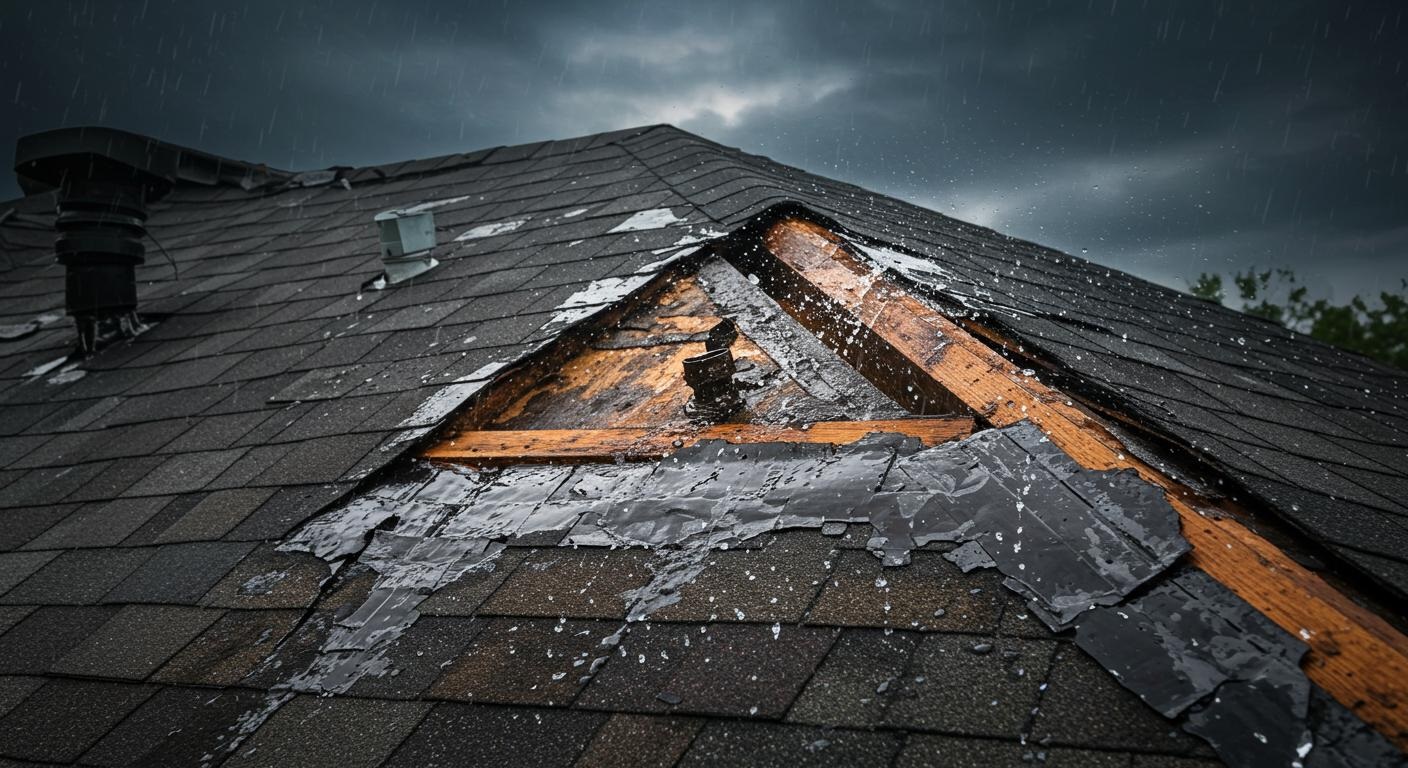
Recurring leaks can indicate that the roofing system is deteriorating beyond isolated repair areas.
2. The Roofing System Is Approaching the End of Its Service Life
An aging roof may gradually develop:
- Brittle or deteriorated materials
- Surface cracking
- Open seams
- Failed flashing
- Ponding
- Frequent leaks
- Increasing repair requirements
A professional roof assessment can help determine whether the system still has useful life remaining.
3. Repairs Are Becoming Frequent and Expensive
Commercial roof repairs can become a recurring operational expense.
You may be spending money on:
- Leak repairs
- Flashing repairs
- Seam repairs
- Drainage problems
- Membrane patches
- Emergency service
Instead of looking at one repair invoice, consider the total cost of maintaining the roof over several years.
4. You See Widespread Membrane or Surface Deterioration
Depending on the roofing system, problems can include:
- Cracks
- Blisters
- Open seams
- Punctures
- Deteriorated coating
- Shrinkage
- Surface degradation
- Damaged edge details
A few isolated defects may be repairable.
5. Ponding Water Keeps Appearing
Persistent ponding may be associated with:
- Blocked drains
- Poor drainage design
- Settlement
- Uneven roof areas
- Inadequate slope
- Damaged drainage components
Standing water adds ongoing stress to the roofing system and should be evaluated.
6. The Roof Deck or Insulation Has Moisture Damage
Water intrusion can affect:
- Insulation
- Roof deck
- Structural components
- Interior finishes
7. The Building Has Poor Energy Performance
If a property experiences:
- Uncomfortable interior spaces
- Significant temperature differences
- Increasing heating or cooling demands
- Aging insulation
- Air leakage concerns
it may be worthwhile to evaluate the roof system and insulation.
8. Flashing and Roof Penetrations Are Failing
Commercial roofs often contain numerous penetrations and transitions.
Examples include:
- HVAC equipment
- Vents
- Pipes
- Skylights
- Curbs
- Roof edges
- Wall intersections
These locations require careful detailing because they create potential pathways for water intrusion.
9. Your Roof Is Affecting Business Operations
A deteriorating roof can affect:
- Employees
- Tenants
- Inventory
- Equipment
- Customers
- Office operations
At some point, the cost of business disruption can become more significant than the roofing repair itself.
Commercial Roof Repair vs. Replacement
One of the most important decisions for a property owner is determining whether the roof should be repaired or replaced.
Commercial Roof Repair May Be Appropriate When:
- Damage is localized.
- The roofing system is relatively young.
- Most of the membrane or surface remains sound.
- Flashing has isolated damage.
- Drainage problems can be corrected.
- Repairs have historically been infrequent.
Repair can extend the useful life of a roofing system when the underlying materials remain in good condition.
Commercial Roof Replacement May Be Better When:
- Damage is widespread.
- Leaks occur in multiple areas.
- Repairs are becoming frequent.
- The roof is significantly deteriorated.
- Insulation has extensive moisture damage.
- Ponding persists.
- Flashing repeatedly fails.
- The roof is approaching the end of its service life.
The decision should be based on the roof’s overall condition, not on one isolated leak.
Common Commercial Roofing Systems
The ideal replacement system depends on the building and existing conditions.
TPO Roofing
Thermoplastic polyolefin, commonly called TPO, is a single-ply membrane widely used on many commercial buildings.
It can offer:
- Flexible installation options
- Reflective surface options
- Durable membrane construction
- Welded seams
EPDM Roofing
EPDM is another common single-ply commercial roofing membrane.
It is recognized for its flexibility and weather resistance and has been used extensively on low-slope commercial buildings.
PVC Roofing
PVC membranes provide a single-ply roofing option designed for commercial applications.
Depending on the product, PVC systems can provide resistance to weather exposure and certain chemicals.
Modified Bitumen
Modified bitumen systems are multi-layer commercial roofing assemblies derived from traditional built-up roofing technology.
They may be installed using different application methods depending on the product and building requirements.
Metal Roofing
Metal roofing can provide long-term durability for certain commercial buildings.
It is commonly considered where strength, longevity, and architectural appearance are priorities.
How Much Does Commercial Roof Replacement Cost?
Important factors include:
- Total roof area
- Roofing material
- Roof accessibility
- Roof slope
- Existing roof removal
- Number of penetrations
- Drainage requirements
- Insulation
- Roof deck condition
- Flashing
- Edge details
- Labor
- Disposal
- Building occupancy
- Project complexity
A detailed site inspection and written proposal provide a much more meaningful estimate than a generic cost-per-square-foot figure.
What Happens During a Commercial Roof Replacement?
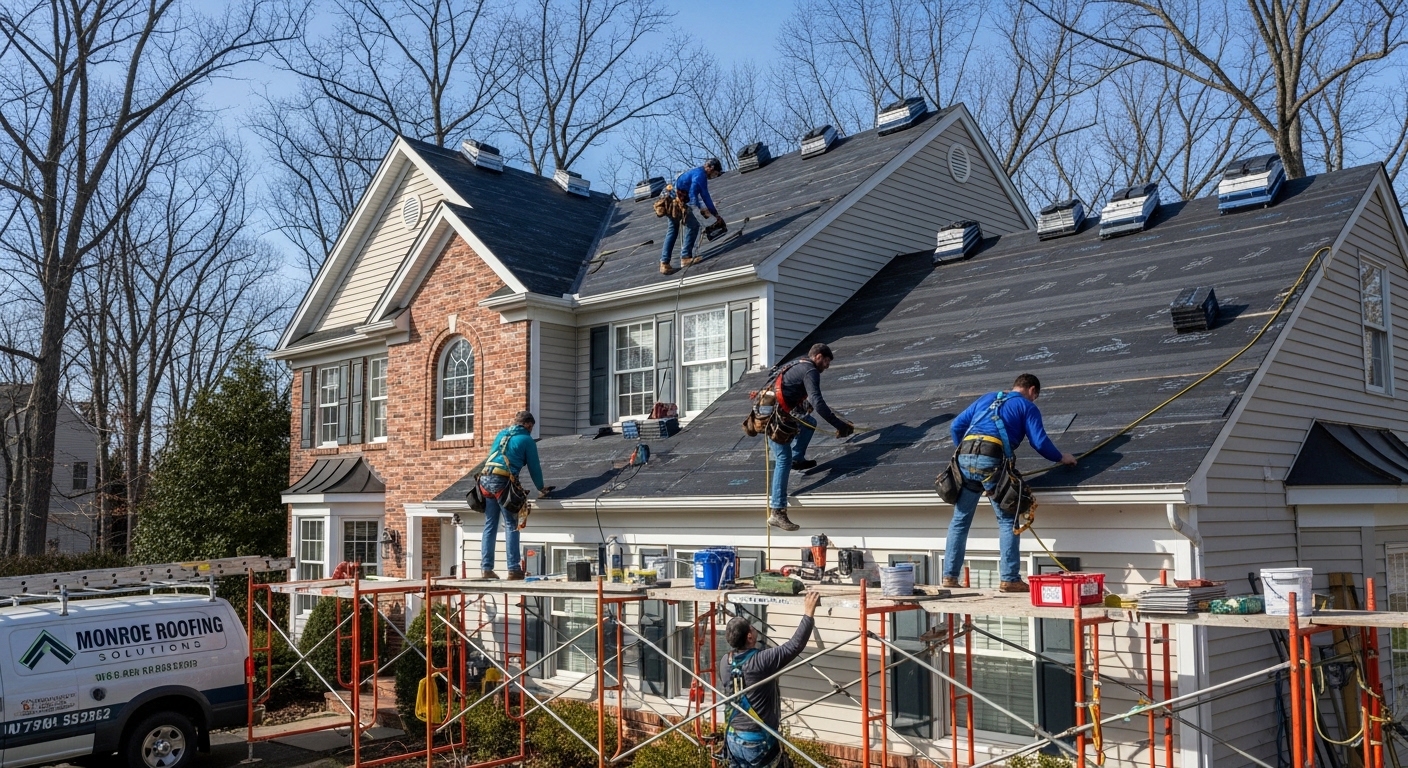
A professional replacement project should be carefully planned from beginning to end.
Step 1: Roof Inspection
The contractor evaluates the existing roofing system and identifies areas requiring attention.
Step 2: Project Planning
The contractor reviews:
- Roofing material
- Access
- Safety requirements
- Building occupancy
- Drainage
- Scheduling
For occupied commercial properties, planning around business operations is particularly important.
Step 3: Removal of Existing Roofing
The existing roofing system is removed according to the project’s scope and applicable requirements.
Step 4: Roof Deck and Insulation Evaluation
Once the existing system is exposed, the underlying assembly can be evaluated for moisture or deterioration.
Step 5: Repairs and Preparation
Damaged decking or other components are addressed before the new roof is installed.
Step 6: Install New Roofing System
The selected membrane or roofing material is installed according to the manufacturer’s requirements and project specifications.
Step 7: Flashing and Penetration Work
Roof edges, curbs, vents, penetrations, walls, and other transitions are properly detailed.
Step 8: Drainage Evaluation
Drains, scuppers, gutters, downspouts, and other drainage components are checked to ensure water can leave the roof effectively.
Step 9: Final Inspection
The completed system is inspected for workmanship, detailing, drainage, and overall installation quality.
How to Minimize Business Disruption During Roof Replacement
Discuss with your contractor:
- Work schedules
- Access routes
- Employee safety
- Customer access
- Equipment protection
- Material staging
- Noise
- Weather contingency plans
- Daily cleanup
- Communication procedures
For businesses with customers or tenants on-site, scheduling certain work during less disruptive periods may be beneficial.
How to Choose a Commercial Roofing Contractor
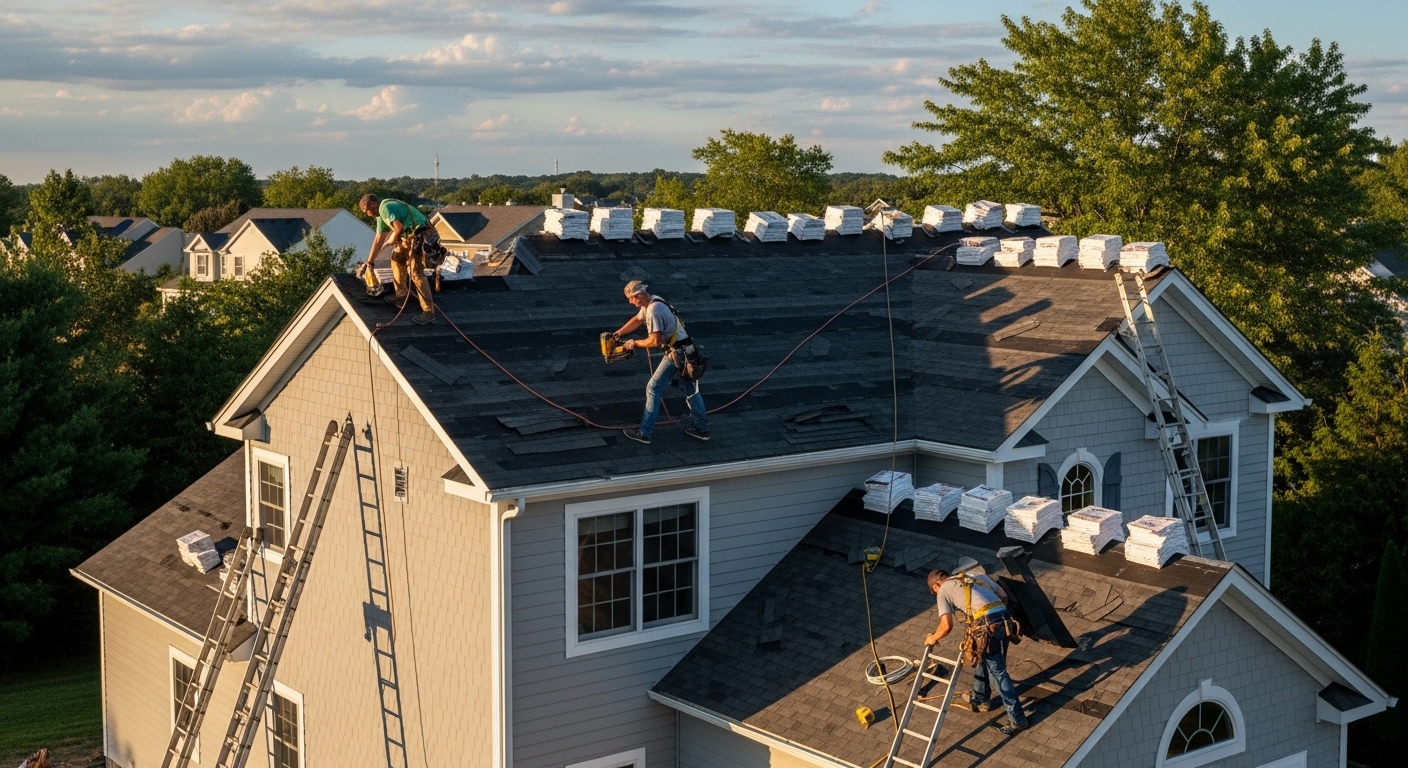
The contractor you choose can have a major impact on the performance and longevity of the new roof.
Verify Licensing and Insurance
Make sure the contractor has appropriate licensing and insurance for the work being performed.
Look for Commercial Experience
Commercial roof replacement involves different systems and project requirements than many residential roofing projects.
Ask about previous commercial projects involving:
- Flat roofs
- Low-slope roofs
- Large buildings
- Multiple roof penetrations
- Complex drainage
- Occupied properties
Request References or Project Examples
A reputable contractor should be able to discuss relevant past projects.
Compare Detailed Proposals
Don’t compare only the final price.
Review:
- Roofing system
- Materials
- Insulation
- Flashing
- Removal
- Disposal
- Warranty
- Timeline
- Cleanup
Ask About Manufacturer Requirements
Some roofing products have specific installation requirements that can affect warranty eligibility.
Your contractor should be able to explain the proposed system and installation approach.
Common Commercial Roof Replacement Mistakes
Waiting Until Major Leaks Appear
A roof can experience deterioration long before a major interior leak occurs.
Routine inspections can identify developing problems earlier.
Choosing a Contractor Based Only on Price
The lowest proposal isn’t automatically the best value.
Compare the actual roofing system, preparation, workmanship, warranty, and project scope.
Ignoring Drainage
A new roofing membrane won’t solve every drainage problem.
Roof drains, scuppers, gutters, and other components need to be considered as part of the system.
Failing to Inspect the Deck
Covering deteriorated materials with a new roof can allow underlying problems to remain.
Ignoring Business Operations
Commercial roofing requires planning around occupants, employees, customers, and tenants.
How to Maintain a New Commercial Roof
A commercial roof maintenance plan can include:
- Routine visual inspections
- Drain and scupper checks
- Gutter maintenance
- Flashing inspections
- Penetration inspections
- Post-storm evaluations
- Debris removal
- Early leak investigation
Regular maintenance can help identify issues before they become major failures.
Why Choose JVW Roofing?
For more than 40 years, JVW Roofing has helped property owners protect their buildings through professional roofing and exterior services.
JVW Roofing is a GAF Master Elite® Contractor an exclusive distinction held by only the top 3% of roofing contractors in the United States, and operates under NJ License #13VH14032300.
- Roof replacement
- Roof repair
- Roof inspections
- Emergency roof repair
- Gutter services
- Commercial gutter installation
- Commercial siding
- Window installation
- Door services
- Skylight services
- Exterior remodeling
Our approach focuses on understanding the property’s actual condition and recommending practical solutions rather than treating every roofing problem the same way.
If a commercial roof is leaking repeatedly, showing widespread deterioration, or creating increasing maintenance costs, a professional evaluation can help determine whether repair or replacement is the appropriate next step.
Frequently Asked Questions
How do I know if my commercial roof needs replacement?
Recurring leaks, widespread deterioration, frequent repairs, persistent ponding water, damaged flashing, moisture in the roof assembly, and an aging roofing system can all indicate that replacement should be considered.
Can a commercial roof be repaired instead of replaced?
Yes. Localized problems can often be repaired when the overall roofing system remains in good condition. Widespread deterioration may make replacement more practical.
What is the best commercial roofing system?
There is no universal answer. TPO, EPDM, PVC, modified bitumen, and metal roofing can all be appropriate depending on the building, roof design, climate, budget, and project requirements.
How long does commercial roof replacement take?
Project duration depends on the roof size, roofing system, weather, accessibility, existing roof condition, and complexity. Larger or occupied properties may require more extensive scheduling and coordination.
How much does commercial roof replacement cost?
Cost varies based on roof area, material, insulation, roof deck condition, removal requirements, drainage, penetrations, labor, and project complexity. An on-site estimate provides the most reliable cost information.
Can a new commercial roof improve energy efficiency?
It can, particularly when replacement includes appropriate insulation and a roofing system suited to the building. However, overall energy performance also depends on HVAC systems, walls, windows, air sealing, and building operations.
How often should a commercial roof be inspected?
Inspection frequency depends on the roofing system, age, environment, and maintenance program. Additional inspections after significant weather events can also help identify damage early.
Should I replace my commercial roof before it starts leaking?
Not necessarily. But if inspections show significant deterioration or the roof is approaching the end of its useful life, proactive replacement may reduce the risk of emergency failures and business disruption.
Final Thoughts
A commercial roof is a long-term investment in the building itself. When the system begins to develop recurring leaks, widespread deterioration, drainage problems, moisture damage, or increasingly expensive repairs, continuing to patch individual problems may no longer be the most practical strategy.
The decision to pursue commercial roof replacement should come from a complete evaluation of the roofing system.
A qualified contractor should examine the roof surface, membrane or roofing material, flashing, drainage, penetrations, insulation, and roof deck before recommending replacement.
The right replacement system can provide improved protection, more predictable maintenance, and a stronger foundation for long-term building performance.
For more than 40 years, JVW Roofing has provided professional roofing and exterior services backed by experienced workmanship and dependable customer care.
Concerned about the condition of your commercial roof? Contact JVW Roofing today for a professional evaluation and FREE estimate.